Full replacements from Chestnut Hill: Boston, Newton, Brookline and about 30 miles around
Siding Installation & Replacement in Boston, Newton & Brookline
Siding replacement and new siding installation are what we do when a house is past patching: the old siding comes off down to the sheathing, rot is cut out, and new vinyl, James Hardie fiber cement, cedar shingle or clapboard goes on over fresh housewrap and flashing. Repair comes first in our name and in most of our calls, so we say plainly when a wall only needs a patch. From our base in Chestnut Hill we replace siding in Boston, Newton, Brookline and the towns around them, and the estimate is free.
- Vinyl, James Hardie fiber cement, cedar shingle and clapboard installed
- Old siding stripped to the sheathing, not covered over
- New housewrap and window flashing on every replacement
- Free estimates; a replacement is measured on site
- (857) 245-9588 answers calls, texts and WhatsApp
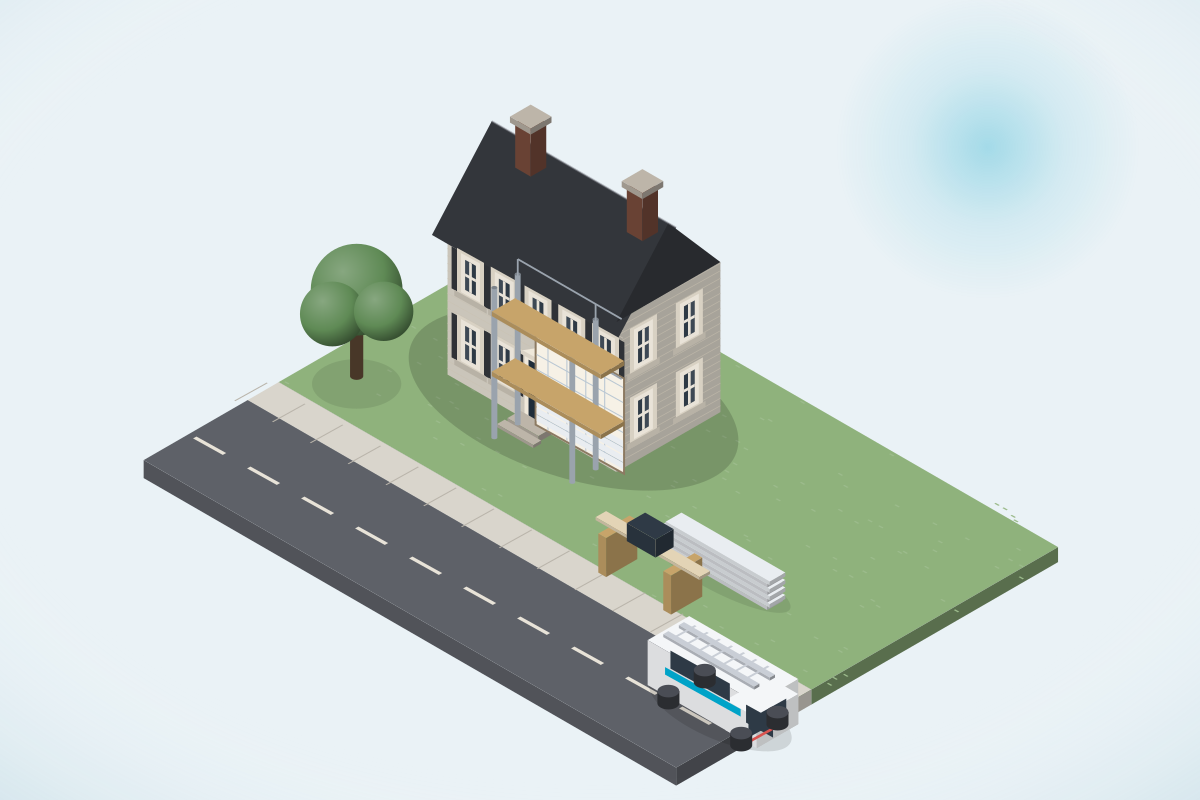
Signs it is time to replace, not repair
On a site visit, these are the signs that a house is past patching and ready for new siding:
- Rot behind the trim in more than one place. One soft corner board is a repair. Soft sheathing at several windows and along the sill line means water has been getting in for years.
- Vinyl brittle and cracked on every wall. When every repair snaps the panel next to it, the house is ready for new siding.
- Cedar shingles cupped, split and thin at the butt. When a screwdriver goes through the butt, there is nothing left to nail to.
- Paint that fails within a year of every repaint. On clapboard this usually means moisture coming through the wall, and back-primed clapboard over new housewrap fixes the cause.
- Loose panels on several walls after a nor’easter. One wall is a storm repair with 24-hour emergency service; every wall means the fastening has failed.
Repair or replace?
Damage on one wall, one corner or one window is usually a repair, and we take small jobs. See siding repair, vinyl siding repair and wood and cedar siding repair and painting. A photo of the wall texted to (857) 245-9588 is usually enough for us to tell a repair from a replacement before anyone drives out.
Materials we install
We install the sidings that make sense on Boston-area houses and tell you which one fits your house and your street.
- Vinyl siding installation. The usual choice for two-families and post-war colonials: a level starter strip, J-channel at every opening and panels hung loose on the nails so they can move.
- James Hardie fiber cement siding. Looks like painted clapboard and does not rot. Needs the right gap at butt joints, flashing behind each joint and the nails the manufacturer specifies.
- Cedar shingle and clapboard siding. The traditional siding on pre-war houses in Newton, Brookline and Jamaica Plain. We back-prime clapboard, use stainless or hot-dipped galvanized nails and match the shingle exposure to the house.
- Metal, stucco and combinations. Metal on modern additions, stucco on older houses, shingle gables over clapboard.
How it works: from estimate to cleanup
- Estimate and material choice. Call, text or send a photo of the house. On the site visit we probe the trim and sills, check the sheathing where we can and measure every wall. The written estimate settles the material, profile, color, trim scope, flashing plan and how rot is handled. See how a siding estimate is built.
- Permit. Siding replacement in Boston generally needs the city’s building permit; the other towns have their own rules, and a historic district adds a review, so check with the town’s historical commission first.
- Removal, sheathing check, housewrap and flashing. Old siding is stripped to the sheathing and hauled away. Rot at the sill, under the windows and at the corners is cut out and replaced. Then new housewrap lapped and taped, flashing tape over each window nail fin, head flashing above every window and door, and kick-out flashing where a roof meets a wall.
- Installation, trim and finishing, cleanup. Vinyl goes on a level starter strip; fiber cement gets flashing behind the butt joints; clapboard goes up back-primed with the laps lined up at the window heads; shingles are laid at a consistent exposure with staggered joints. Corner boards, casings, rake and frieze boards are replaced or wrapped as agreed, wood trim is primed, painted and caulked, and we finish with a magnet sweep for nails and a walk around the house with you.
Gutters, a roof edge or a window can go on the same contract; those are listed under other exterior services. To start, get a free estimate online, or call or text (857) 245-9588 and give us the address.
How long it takes
Vinyl on a small colonial or Cape is the shortest job, cedar shingle the slowest because every shingle is nailed by hand, and any house with rot takes longer because the sheathing comes first. Rain and freezing weather can add a pause.
Two warranties: product and workmanship
New siding carries two warranties. The manufacturer’s limited warranty covers the product and holds only when the siding is installed the way the manufacturer specifies, one more reason the housewrap, flashing and nailing matter.
How payment works
The estimate lists material, labor and trim as separate lines.
Before and after
The pairs here will be shot from the street, same spot before and after.
Where we work
Whole-house replacement comes up most on the post-war colonials and Capes of Needham, Dedham, Westwood and Waltham, where first-generation vinyl has gone brittle, and on the two- and three-families of Roslindale, Hyde Park and Dorchester, where one cracked panel rarely comes alone. Pre-war clapboard and cedar shingle in Newton, Brookline and Jamaica Plain is more often repaired than replaced. Our base is 115 Grove St in Chestnut Hill, the Newton village that touches Brookline, and the service area is Boston and about 30 miles around Chestnut Hill.
Questions homeowners ask
At what point is a house past repair and ready for replacement?
Two questions settle it. First, how much of the sheathing is wet: one soft spot under a window is a repair, soft boards along a whole sill line are not. Second, whether the siding can still be matched: a discontinued vinyl profile or clapboard of an odd width pushes a three-wall repair into a replacement.
Why strip the old siding instead of installing over it?
Because the sheathing is the only place to fix what went wrong. New siding over old leaves soft boards in the wall, pushes the panels out past the window casings so the flashing cannot lap properly, and gives the nails less to bite into. That is why our replacements start with stripping.
What happens when rotten sheathing turns up under the old siding?
It is replaced before the housewrap goes on, and you see it first. We photograph each opening before it is closed up, and the estimate already states how sheathing work is handled, so the job does not stall.
Which replacements need a building permit, and when does the historical commission come in?
A full replacement is the job that triggers permits: in Boston it generally needs the city's building permit, Newton, Brookline and the other towns each go by their own building department's rules, and a few swapped panels usually need none of it. The historical commission is a separate check that belongs before the estimate is final: in a local historic district, check with the town's historical commission before the material, exposure or trim profile changes, and bring its answer to the site visit.
Which siding holds up to Massachusetts weather?
All of the materials we install handle nor'easters, freeze-thaw cycles and summer sun when they go on over housewrap with proper flashing. The weak point is almost always the flashing at windows, roof-to-wall joints and the eaves where ice dams form, not the siding.
Do you replace trim, corner boards and window casings with the siding?
Usually yes, because the old trim is where rot starts and the new siding has to sit tight against it. The estimate lists which boards are replaced, which are wrapped in aluminum or PVC and which stay.
Can I stay in the house while the siding is replaced?
Yes; all the work is outside. Expect hammering on whichever wall is being sided, so take pictures and mirrors off those walls, keep the windows closed while we strip, and leave the driveway free for the material delivery and the debris container.
Does the whole house have to be done at once, or can we do it in stages?
It can be staged by wall; doing the sun sides first, usually south and west, is common on cedar and clapboard houses. The catch is matching: new siding next to old on the same corner shows a line, so we break stages at a corner board or a change of material and write both stages on the estimate.
Where we work
Based in Chestnut Hill, we cover Boston and the towns within about 30 miles. First-wave town pages:
Get a free estimate
Tell us what you see on the wall, or just leave a phone number and we will call back. Calls and texts: (857) 245-9588, also on WhatsApp. E-mail: [email protected].
Based at 115 Grove St, Chestnut Hill, MA 02467. Open 8:00 AM – 9:00 PM every day.